
Manfred Steyer
GDE for Angular, softwarearchitekt.at | Austria
Talk
Architecture as an Executable Contract: Making AI Agents Respect Your Angular Architecture
This session shows how to make your Angular architecture an executable contract that coding agents actually follow. The building blocks: Rules and architecture specs that carry your conventions into the agent's context, Skills for recurring tasks, and deterministic architecture checks wired into the agent's feedback loop through stop-hooks — so every violation triggers an automatic correction round instead of silent technical debt. And because teams rarely standardize on one tool, we keep a single source of truth across agents like Claude Code, Cursor, and Codex.
Then we flip the perspective and let AI review the architecture, evaluating boundaries both heuristically and forensically — mining the Git history for change coupling, hotspots, and knowledge concentration.
You'll leave knowing how to wire architecture rules into your agents' feedback loop — and how to let AI audit whether your boundaries still hold. Expect live demos throughout.
About Manfred Steyer
Workshop
Modern Angular Architectures for 2027: AI-Ready, Signal-First, Practice-Proven - Master Class (In-Person & Online)
This workshop focuses on modern, long-lived Angular architectures and the key developments shaping frontend engineering in 2026. You'll learn how Signals, the Resource API, NgRx SignalStore, and Signal Forms work together to enable a reactive architecture, combined with proven concepts like vertical architectures, feature slicing, and enforceable architecture rules.
A special focus is on AI-assisted frontend engineering: how to make architectural decisions explicit, how to provide the right context through rules, skills, MCP, and hooks, how to evaluate modularization with AI and architecture tools, and how to use deterministic checks as guardrails for coding agents.
We focus not only on the APIs but also place strong emphasis on the underlying concepts. We discuss how the principles of good reactive design, modularization, and maintainable frontend architecture can be implemented with modern Angular, both with and without AI assistance.
Labs
All labs can be completed in the traditional way or with AI assistance, using rules, skills, MCP, and hook-based deterministic checks to keep the architecture under control.
Target Group
Developers with Angular experience who want to design and build modern Angular solutions that remain maintainable in the long run, and who want to understand how AI-assisted development changes the way we define, enforce, and evolve frontend architectures.
Workshop
Agentic UI with Angular: How We Build the User Interfaces of Tomorrow - Master Class (In-Person & Online)
Solutions based on Large Language Models are evolving rapidly, moving away from chat interfaces toward agentic systems that plan tasks, invoke tools, and orchestrate workflows. Developing such systems imposes new requirements on architecture and UI integration.
In this hands-on workshop, you will learn how agentic solutions can be implemented with Angular. Thanks to standards such as AG-UI, A2UI, and MCP Apps, frontend and backend remain cleanly decoupled, without vendor lock-in and regardless of the backend technology.
By the end, you will have a working example and a clear understanding of how to productively deploy agentic applications.
Target Group
Developers with Angular experience who want to provide more value to their users by incorporating Agentic AI and UI.
Manfred Steyer in action
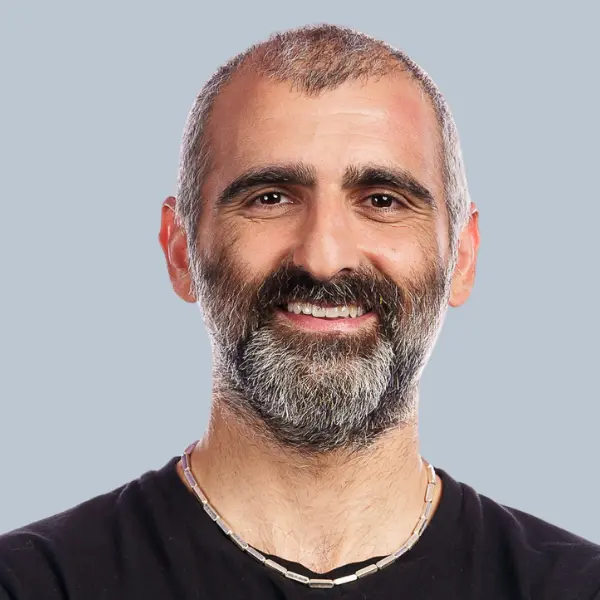
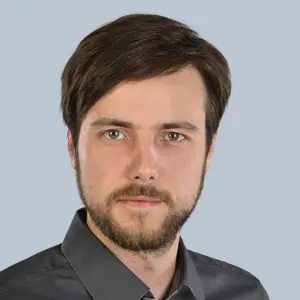
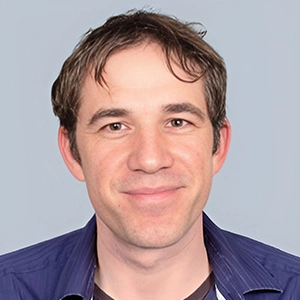
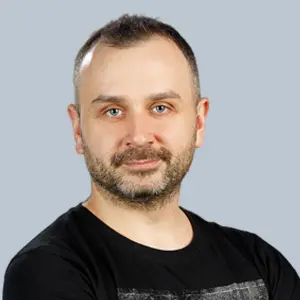
Learn from the Best Speakers 2026



















Companies that support our community
Our Sponsors 2026
By becoming a sponsor of NG Poland you will get an excellent opportunity to showcase your
company and products to 1500 of the most active developers from around the world.
Such exposure will definitely help you to generate interest in your company, as well as allow
you to find new business partners and potential employees.
To learn more about our sponsorship offer, please fill in the form.
Gold Sponsor

Gold Sponsor

Special Sponsor

Special Sponsor

Special Sponsor

Special Sponsor

Special Sponsor

Special Sponsor

ngGirls Sponsor

Stay in the loop Join our mailing list
Sign up to receive updates about NG Poland, including workshops, speaker previews, ticket launches, NG Awards, Behind the Code Magazine, CFP details and other exclusive content. We won’t spam you and will only send you emails we genuinely think you’ll find interesting. You can unsubscribe at any time and you can find more information here.
- No spam
- Unsubscribe anytime
- Only the good stuff