
Manfred Steyer
GDE for Angular, softwarearchitekt.at | Austria
Talk
Reactive Thinking with Signals and the New httpResource
In this session, you will learn how to successfully navigate this essential transition. We will focus on the underlying signal graph and use a hands-on example to highlight the key aspects.
By the end, you will know how to apply reactive thinking to thrive in the world of Signals.
About Manfred Steyer
Workshop
Modern Angular Architectures, Fall 2025 Edition: Nx, Signals, and Signal Store by Manfred Steyer & Michael Egger-Zikes (stationary & online)
We continue with integrating Signals that will shape the future of the framework and leverage the new Resource API including the httpResource for establishing a reactive design. Then, we use the brand-new NGRX Signal Store to establish modern and lightweight state management patterns.
In the end, you will know how you can use the individual tools to design modern and, above all, long-term maintainable Angular architectures.
What’s new in the Fall 2025 Edition?
✔️ Using Forensic Analyses for investigating the “healthiness” of your architecture
✔️ Strong focus on reactive architectures with Signals and the httpResource
✔️ Strong focus on state management patterns with the NgRx Signal Store
Agenda
Part 1: Professional Project Setup & Modularization
✔️ Enforcing Domain-driven and technical Module Boundaries with Nx and Sheriff
✔️ Visualizing and Evaluating your Architecture with Forensic Analyses
✔️ Bonus: Micro Frontends with Native Federation
Part 2: Reactive Architectures with Signals and the Resource API
✔️ Reacting Thinking and the Signal Graph
✔️ Your reactive architecture on top of Signals and httpResource
✔️ Signals vs. RxJS – When to use what?
✔️ Best of both worlds: RxJS Interop
Part 3: State Patterns with the NgRx Signal Store
✔️ Lightweight Stores in your Architecture
✔️ Managing Entities
✔️ Normalization
✔️ The Event API and Redux
✔️ Covering repeating cases with Custom Features
Books


Manfred Steyer in action
Learn from the Best Speakers

Minko Gechev
Angular Core Team, Google | USA

Alex Rickabaugh
Angular Core Team, Google | USA

Jeremy Elbourn
Angular Core Team, Google | USA

Jens Kuehlers
Angular Core Team, Google | Germany
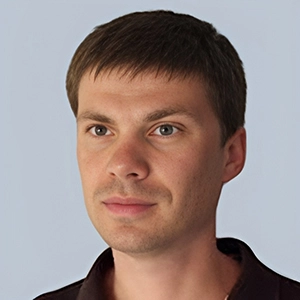
Pawel Kozlowski
Angular Core Team, Google | France

Catalina Patiño
Software Engineer, Google | Colombia

Piotr Tomiak
Senior Software Developer, JetBrains | Poland

Joanna Ostrowska
Software Engineer, Google | Poland

Matthieu Riegler
Angular Core Team, Google | France

Brygida Fiejdasz
GDE for Angular, Lead of Frontend Competence Center, Avenga | Poland

Łukasz Jancewicz
Staff Software Engineer, Google | Poland

Kasia Biernat-Kluba
Principal Software Engineer, Hyland | Poland
Manfred Steyer
GDE for Angular, softwarearchitekt.at | Austria

Alex Okrushko
Senior Software Engineer, Snowflake | Canada
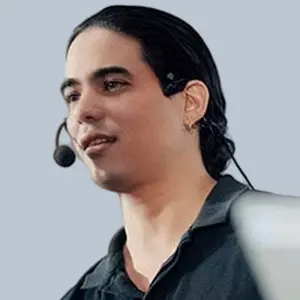
Nir Kaufman
Tech Lead, Full-stack AI Engineer, GDE, Tikal | Israel

Michael Egger-Zikes
Trainer & Consultant, AngularArchitects.io | Austria

Younes Jaaidi
Software Development Cook, Teacher & Coach, GDE | France

Vojtech Mašek
CTO, FlowUp | Czech Republic

Alexander Thalhammer
Passionate Angular Developer, Angular Architects | Austria

Tomas Trajan
Architect, Consultant and Trainer, GDE , AngularExperts.io | Switzerland
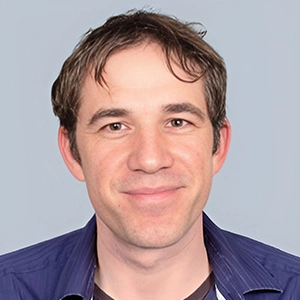
Rainer Hahnekamp
Trainer and Consultant, AngularArchitects.io | Austria

Rafal Brzoska
Solution Architect, Future Processing | Poland
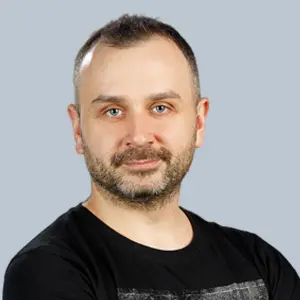
Tomasz Ducin
Independent Consultant, Architect, Developer & Trainer, Poland

Dr. Philippe De Ryck
Security Expert, Founder, GDE, Pragmatic Web Security | Belgium

Daniel Sogl
Software-Architekt, Thinktecture AG | Germany

Dariusz Kalbarczyk
Google Developer Expert, Author, Podcaster, NG/JS/AI POLAND | Poland
Meet our first speakers for 2025! More to be announced soon. Interested in joining? Apply below!
Call For Papers 2025


Companies that support our community
Our Sponsors 2025
By becoming a sponsor of NG Poland you will get an excellent opportunity to showcase your
company and products to 1500 of the most active European developers.
Such exposure will definitely help you to generate interest in your company, as well as allow
you to find new business partners and potential employees.
To learn more about our sponsorship offer, please fill in the form.
Platinum Sponsor

Gold Sponsor
Special Sponsor

Special Sponsor

Special Sponsor

Special Sponsor

Special Sponsor

Special Sponsor

Special Sponsor

ngGirls Sponsor

Join our mailing list
Sign up to receive updates about NG Poland, including workshops, speaker previews, ticket launches, NG Awards, Behind the Code Magazine, CFP details and other exclusive content. We won’t spam you and will only send you emails we genuinely think you’ll find interesting. You can unsubscribe at any time and you can find more information here.